
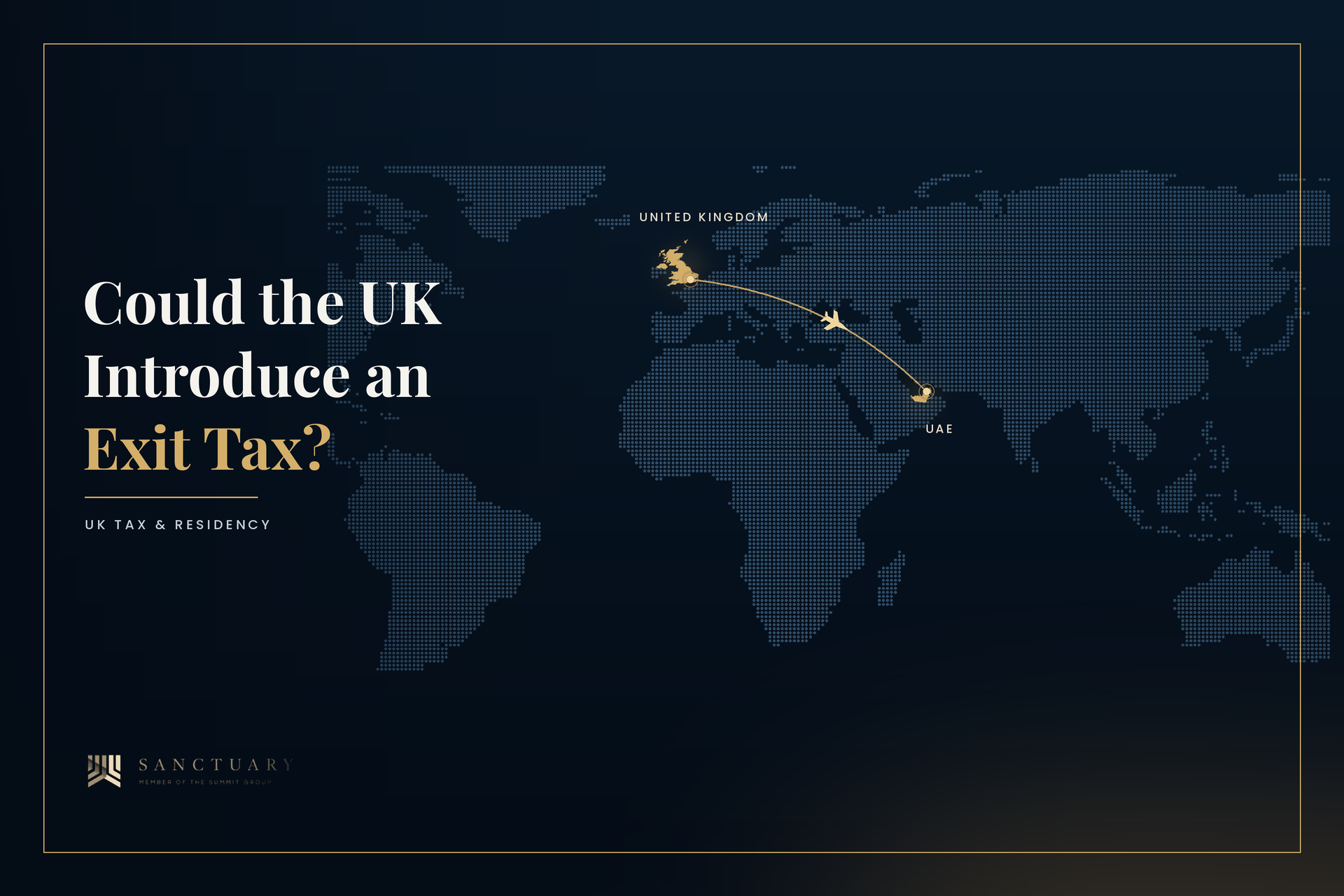
Renewed debate over taxing wealth has brought the possibility of a UK exit tax back into the spotlight, after Andy Burnham declined to rule out the idea of introducing one in the future. An exit tax would represent a significant change to the UK tax landscape and could potentially require individuals leaving the UK to pay tax on unrealised gains built up while they were UK resident, even where those assets have not yet been sold.
At present, the UK does not impose a general exit tax on individuals. Simply becoming non-UK resident does not trigger a deemed disposal of your assets for Capital Gains Tax purposes. However, that does not mean leaving the UK is free from tax consequences.
Existing rules already catch a number of situations that taxpayers sometimes overlook. The temporary non-residence rules can tax gains realised while abroad if an individual returns to the UK within the relevant period. Non-residents may still be liable to UK tax on disposals of UK property, while business owners also need to consider the tax treatment of dividends and other company distributions upon relocating.
If the UK were to introduce an exit tax, it would likely operate by treating certain assets as if they had been sold immediately before an individual ceased to be UK tax resident. Capital Gains Tax would then be calculated on the unrealised appreciation that accrued during UK residence, even though no actual disposal had taken place. Variations of this approach already exist in several jurisdictions, making the concept far from unprecedented.
One important question is whether any future rules could take effect immediately. Recent tax legislation has frequently included anti-forestalling provisions, meaning new measures can apply from the date they are announced rather than from the start of the following tax year. If an exit tax were introduced, relying on a last-minute move abroad may not achieve the intended result.
For anyone considering relocating overseas, the focus should remain on the law as it stands today rather than speculation. Residence status, unrealised gains, business interests and the tax rules of the destination country all deserve careful consideration before any move.
Whether or not the UK ultimately adopts an exit tax remains uncertain. What is clear, however, is that the debate is no longer purely theoretical, and internationally mobile individuals should continue to watch this area closely.
How can Sanctuary help?
For internationally mobile individuals, a potential UK exit tax highlights the importance of planning ahead rather than reacting after tax rules change. Residence status, unrealised gains, business interests, ownership structures and the tax treatment in the destination country should all be carefully reviewed before any relocation takes place.
At Sanctuary, we help clients assess the tax implications of leaving the UK, review residence positions, evaluate exposure to capital gains tax and inheritance tax, and structure cross-border affairs in a tax-efficient manner. Whether you are considering a move to the UAE or another jurisdiction, our team can help you understand the opportunities and risks under both current and potential future tax rules. Contact us via our website or email hello@sanctuary.ae for a bespoke consultation.
Visit our Tax & Advisory service page to find more about our tax & residency advisory services, or contact us for a bespoke consultation via the contact form or email us at: hello@sanctuary.ae.
For UK businesses considering opportunities in Saudi Arabia, the following steps outline the overall process:
1. Business Activity: Determine the appropriate business activity which will aligns with your business and satisfies all undertakings you will engage with in the Kingdom.
2. Local Partnerships: Consider any potential opportunities for collaborations with established local businesses to ease market entry and meet regulatory requirements.
3. Documentation: Gather the required documentation for incorporation in KSA.
4. Company Registration: Work with experts and the relevant governing bodies to assist with the incorporation process, ensuring compliance with local laws and regulations.
5. Other Requirements: Consider any other requirements for establishing in Saudi Arabia such as capital and tax requirements.
Saudi Arabia's Vision 2030 represents a significant opportunity for UK businesses to engage with an expanding market with vast potential. As the Kingdom continues to diversify its economy and expand its global influence, UK companies are well-positioned to support and benefit from this transformation. With the right strategy, partnerships, and local support, there are a wealth of possibilities.
By aligning your business with Saudi Arabia’s Vision 2030, the benefits for UK and international businesses looking to Saudi Arabia have never been greater.
At Sanctuary, we specialise in assisting businesses looking to expand into Saudi Arabia. We help navigate the complexities of the Saudi market, ensuring that you have the expertise needed to best prepare for success, so get in touch today.
Our expert team offers comprehensive support across a range of services, from company registration, advisory services, and more. Explore our services to discover how we can help you.
Vision 2030 is a strategic framework designed to diversify Saudi Arabia’s economy, reduce its dependency on oil, and transform the Kingdom into a global business hub.
Key points include economic diversification, social reforms, investment in technology and infrastructure, sustainability, and creating a competitive workforce.
The main focus of the Saudi Arabian Vision 2030 strategy is to build on key economic sectors such as hospitality, travel and tourism and build economic stability and sustainability.
Saudi Arabia’s Vision 2030 initiative is aimed at diversifying its economy through strategic investments into the non-oil sector and ensuring a more sustainable economic future.
Saudi Arabia has committed over $500 billion to Vision 2030, funding projects that span a variety of sectors, including energy, tourism, and infrastructure.
Yes, with its growing economy, reform initiatives, and investment incentives, Saudi Arabia is a highly attractive destination for foreign businesses seeking growth opportunities.
Key growing industries include renewable energy, tourism, healthcare, technology, and education.
Saudi Arabia permits foreign owned businesses and investment into the Kingdom, which has been elevated by the Vision 2030 initiative. A MISA licence is required for foreign investors or businesses to establish.
As a result of the diversification efforts of Saudi Vision 2030, the non-oil and private sector in the Kingdom have witnessed unprecedented growth in the past few years. The private sector continues to grow each quarter and the non-oil sectors continue to reach record contributions for the Kingdom’s GDP.


.png)
